What Is a COA and Why Does It Matter?
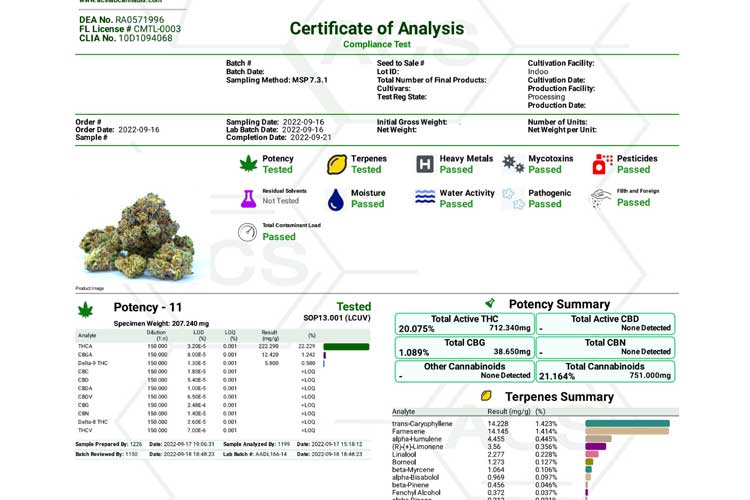
A Certificate of Analysis (COA) is a third-party lab report that tells you exactly what’s in a cannabis product, how much THC, CBD, and other cannabinoids it contains, what terpenes are present, and whether it passed safety testing for contaminants. In Montana, licensed cannabis products are required to be tested, and at LPC, we believe transparency is part of the experience.
If you’ve ever wondered what’s actually in that vape cartridge or flower you just bought, the COA has the answer. Here’s how to read one.
Section 1: Cannabinoid Profile
This is usually the first table you’ll see and the one most customers care about. It lists the concentration of cannabinoids, typically expressed as a percentage by weight or in milligrams per gram. Key things to look for: Total THC (includes THCA converted to THC), Total CBD, and sometimes CBG or CBN levels. The ‘total THC’ figure is what actually matters for potency, not just the raw THC number, which doesn’t account for the heat conversion process.
Section 2: Terpene Profile
Not all COAs include terpenes, but the best ones do. This section lists the aromatic compounds present and their concentrations. Terpenes like myrcene, limonene, caryophyllene, and pinene influence how the product smells, tastes, and potentially how it affects you. A rich terpene profile is often a sign of quality cultivation and careful handling post-harvest.
Section 3: Safety Testing
This is the section that matters most for your health. Look for ‘PASS’ results across categories like pesticides, heavy metals, microbial contaminants (like mold or yeast), and residual solvents (for concentrates and vape products). Any ‘FAIL’ result means the product should not be on the shelf, and it won’t be at LPC.
How to Find COAs for LPC Products
Reputable dispensaries make COAs accessible. You can often find them by scanning a QR code on the packaging, asking a budtender directly, or looking up the batch number on the producer’s website. At LPC, we work exclusively with tested, licensed Montana producers and are happy to help you track down any report you’re curious about. An informed customer is a happy customer.